

Key Takeaways
- Hong Kong is Xiaohongshu’s largest market outside Mainland China, reaching 2.61 million people in March 2026 – more than Taiwan or Malaysia, and over four times Singapore’s reach.
- The audience is older and has significant spending power. Users aged 41 and above form the largest age group, while 97% of Hong Kong’s Xiaohongshu users fall into the medium-to-high spending bracket.
- Travel, local life, and entertainment and culture lead user interests, creating opportunities for brands in hospitality, dining, retail and cultural experiences.
- Xiaohongshu combines social discovery with search intent. Users actively research destinations, products and services, giving brands opportunities to influence decisions before purchases or trips.
- The opportunity spans local consumers and Mainland Chinese visitors. Hong Kong brands can use Xiaohongshu to build visibility among residents and attract visitors researching experiences and services before arrival.
For Hong Kong brands, Xiaohongshu offers an opportunity to reach both local consumers and Mainland Chinese visitors through a single platform. Its role extends from helping people discover places and research products to influencing where they go and how they spend.
According to Xiaohongshu Commercial Data in March 2026, Xiaohongshu reached 2,610,281 people in Hong Kong – more than in Taiwan or Malaysia, and over four times its reach in Singapore. By audience size outside Mainland China, Hong Kong is the platform’s largest market.
In a city of approximately 7.5 million people, that is roughly one in three residents.
This reach matters because Xiaohongshu can influence decisions across the customer journey, from a Hong Kong resident choosing a restaurant to a Mainland visitor researching healthcare or premium services before a trip. Understanding who these users are, what they search for and how they spend reveals where the platform holds the greatest value for local brands.
How many people use Xiaohongshu outside Mainland China?
Xiaohongshu’s reach outside the Mainland is heavily concentrated in three markets: Hong Kong, Taiwan and Malaysia.
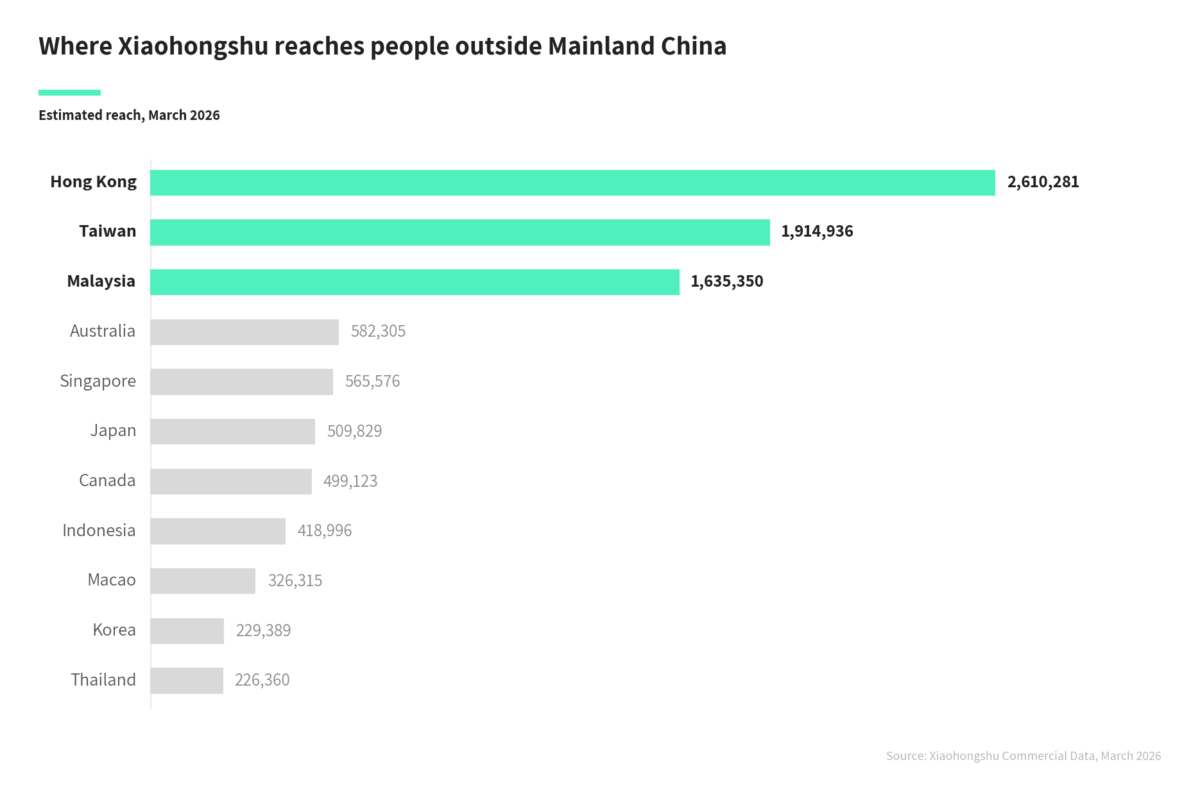
Hong Kong leads this group, while Australia, Singapore and Japan rank fourth, fifth and sixth respectively. This concentration makes Hong Kong particularly important for brands looking to use Xiaohongshu to reach Chinese-speaking audiences and consumers beyond the Mainland.
But audience size only tells part of the story. To understand the commercial opportunity, it is equally important to look at who uses Xiaohongshu in Hong Kong.
Who uses Xiaohongshu in Hong Kong?
Xiaohongshu is often associated with Gen Z, but Hong Kong’s audience profile challenges that perception. The largest single age group is users aged 41 and above, exceeding every other age group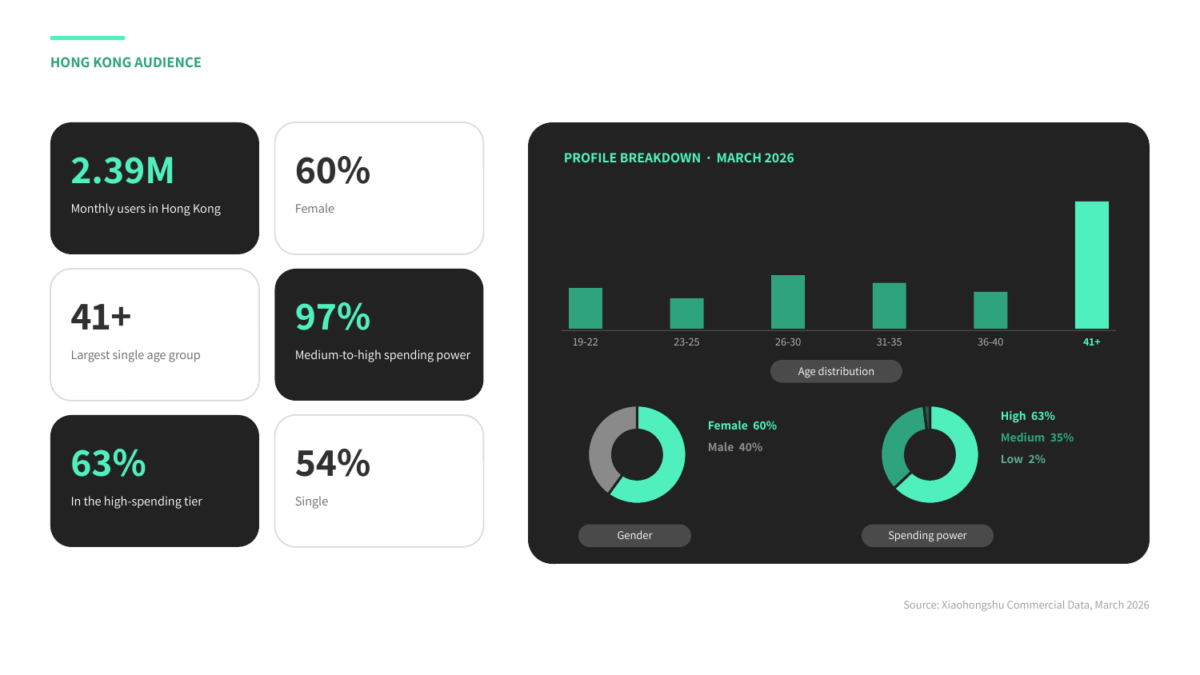
Our February 2026 survey of 549 Hong Kong residents found that Xiaohongshu penetration stood at 62%, rising to 90% among Gen Z. Download the report here.
Spending power adds another dimension to this audience. 97% of Hong Kong’s Xiaohongshu users fall within the medium-to-high spending bracket, with almost two-thirds classified as high-spending.
Together, these findings suggest that Xiaohongshu’s relevance in Hong Kong extends across age groups and spending levels, making its audience worth considering for brands beyond the beauty and youth categories typically associated with the platform.
What this means for brands
For brands targeting higher-spending Hong Kong consumers, this audience profile creates potential opportunities across property, private healthcare, wealth management, premium travel and luxury retail.
What do Hong Kong users actually look for on Xiaohongshu?
Understanding who uses Xiaohongshu is only half the picture. The next question is what brings them to the platform and the answer goes well beyond beauty.
Among Hong Kong users, the leading interest categories are travel, local life, and entertainment and culture.
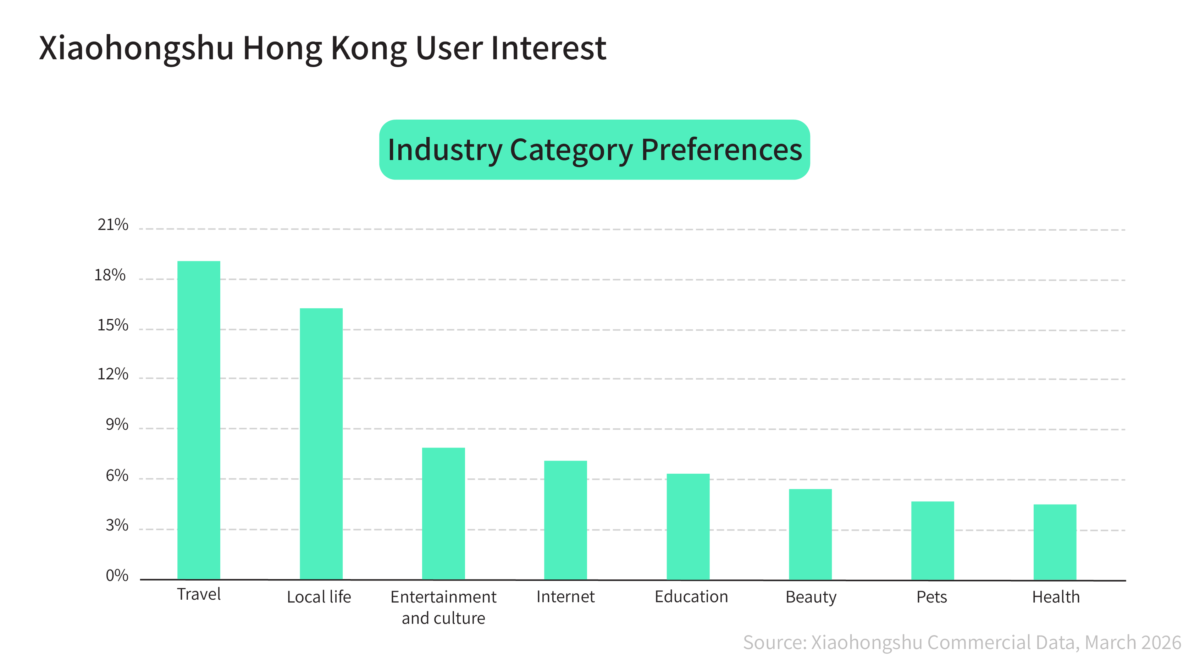
| Rank | Interest category preference | What Hong Kong users look for |
| 1 | Travel | Trip inspiration, travel itineraries, destination recommendations and travel planning |
| 2 | Local life | Restaurant recommendations, local events, neighbourhood discoveries and hidden gems across Hong Kong |
| 3 | Entertainment and culture | Film, art, cultural experiences and live performances |
Engagement patterns reinforce this picture. Food and lifestyle form a core content pillar, while travel and entertainment attract strong interest. Workplace and finance are slightly smaller but noteworthy topic areas, reflecting the professional interests of Hong Kong’s audience. Want to learn more about Finance Marketing tactics? Learn more here.
Taken together, these patterns suggest that Hong Kong users turn to Xiaohongshu for both overseas travel inspiration and local discovery. Restaurants, galleries, cultural venues and hotels can reach people who live nearby and are actively looking for places to visit and experiences to try.
This behaviour points to a broader role for Xiaohongshu: it is a place where users discover ideas and actively seek information.
Why is Xiaohongshu a search engine rather than a feed?
 The difference between a social media feed and a search engine is user intent. On a feed, brands compete for attention by interrupting users as they scroll. On a search engine, brands respond to an existing need by providing relevant answers. Xiaohongshu combines both behaviours, allowing content to reach users during discovery and remain useful when they actively search for information.
This search-driven behaviour is particularly pronounced in travel. More than 80% of Xiaohongshu’s 230 million monthly active travel users search for travel strategies on the platform, generating over 2.4 billion travel queries annually.
For brands, this means content needs to answer the questions users are actively searching for, from travel itineraries and destination recommendations to financial product comparisons and account-opening guidance. Useful, specific content can continue attracting relevant users after its initial publication, supporting discovery and consideration throughout the decision-making process.
For a deeper look at these behaviours in financial services, read our article on Xiaohongshu for Financial Services.
Search intent also helps explain why Xiaohongshu matters to Hong Kong’s inbound visitor market. Consumers can research destinations, services and experiences before they arrive, giving local businesses an opportunity to influence decisions well ahead of the visit.
How big is the Mainland visitor opportunity in Hong Kong?
Xiaohongshu’s search behaviour creates a clear opportunity for Hong Kong businesses targeting Mainland Chinese visitors. With consumers researching destinations, services and experiences before travelling, brands can build visibility while visitors are still planning their trips.
Hong Kong recorded 37.8 million Mainland Chinese visitor arrivals in 2025, an increase of approximately 11% year on year. Mainland visitors accounted for 76% of total visitor arrivals. Their spending reached HKD 27.3 billion in hospitality and a further HKD 21.8 billion in retail.
The Greater Bay Area (GBA) is a major driver of this opportunity. Its 11 cities have a combined population of 86.9 million, placing a large potential visitor market within a few hours of Hong Kong.
Visitor volume is only one part of the opportunity. Repeat-visit intentions and travel behaviour reveal how Hong Kong businesses can attract visitors across multiple trips and experiences.
Travel motivation and behaviour | ||
| Visitor insight | Percentage | What it indicates |
| Intention to return | 94% | Of past visitors intend to return, indicating strong potential for repeat visits. |
| Seeking a total experience | 83% | Visit for a combination of shopping, dining, culture and entertainment, rather than shopping alone. |
| Travelling as social explorers | 72% | Travel with partners, family or friends, highlighting the social nature of the visitor experience. |
| Staying more than one night | 69% | Stay for more than one night, suggesting visitors view the trip as a planned getaway rather than a day trip. |
The reasons Mainland visitors choose Hong Kong also reveal opportunities beyond leisure tourism. Business, finance and professional services rank first, cited by 32% of respondents, followed by healthcare and education at 25%.
These motivations suggest that Hong Kong attracts visitors who come not only to shop and explore, but also to make considered decisions about business, financial services, healthcare and education.
For brands in these sectors, the opportunity begins before visitors arrive. Mainland consumers can research providers, compare options and seek recommendations on Xiaohongshu while planning their trips. Businesses that establish a credible presence on the platform can engage potential visitors during this research and consideration stage before they arrive in Hong Kong.
Are affluent Chinese consumers using Xiaohongshu?
Mainland visitor numbers show the scale of the opportunity. Spending patterns among affluent Chinese consumers offer another perspective: which audiences are using Xiaohongshu, where they want to travel and what they plan to spend on.
Among high-net-worth Chinese consumers, 61% frequently use Xiaohongshu. Hong Kong is also a key destination for this audience: 36% name Hong Kong as their most preferred overseas city, while 45% visit for business.
Their planned spending also points to opportunities for brands in travel, wellness and other experience-led categories.
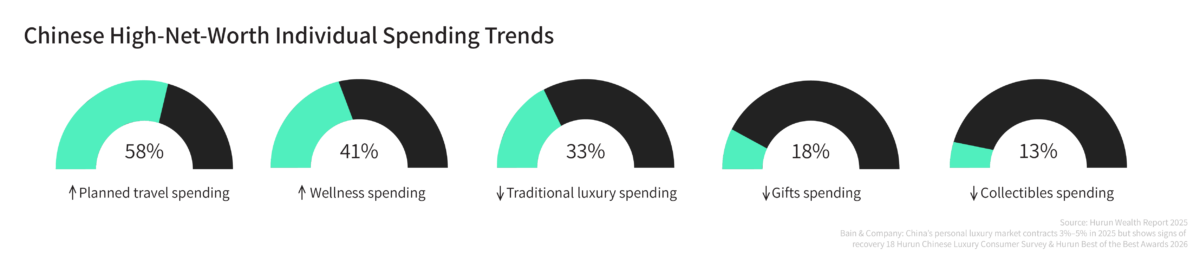
These figures suggest a shift towards experience-led consumption among affluent Chinese consumers. Planned spending on travel and wellness is rising, while spending on traditional luxury goods, gifts and collectibles is declining.
For brands in hospitality, private healthcare, wellness, premium travel and experiential retail, this creates a potential opportunity. A luxury hotel stay, wellness treatment, curated tasting or personalised service can appeal to consumers who increasingly value experiences.
Xiaohongshu provides a channel to reach this audience while they research destinations, explore recommendations and evaluate premium experiences. For brands targeting affluent Chinese consumers travelling to Hong Kong, the opportunity is to build visibility and credibility before the purchase or booking decision is made.
What should Hong Kong brands do on Xiaohongshu?
- Build for local and inbound audiences. Xiaohongshu gives Hong Kong brands an opportunity to reach local residents, Mainland visitors and people planning their trips. Develop a content strategy that serves these audiences, rather than treating the platform exclusively as a cross-border marketing channel.
- Write for search intent. With 73% search penetration among the relevant audience, content should answer specific questions people are actively asking. Prioritise searchable topics, practical recommendations and authentic posts that help users compare options and make decisions.
- Lead with experiences. Travel, local discovery, wellness and culture are relevant content areas for this audience. Show how your brand fits into the experiences people are already looking for, whether that means a hotel stay, a restaurant visit, a healthcare service or a cultural outing.
Looking ahead
Hong Kong’s 2.61 million Xiaohongshu audience presents a significant opportunity for brands looking to reach local consumers and Mainland Chinese visitors. The audience spans age groups, includes a substantial proportion of higher-spending users and actively explores topics that extend well beyond beauty.
For Hong Kong brands, the priority is to understand how their audiences use Xiaohongshu, identify the questions and experiences they search for, and create content that meets those needs.
As more brands recognise the platform’s value, establishing a credible presence and building a library of useful, searchable content can help businesses compete for attention and consideration.
The opportunity is already there. The next step is turning audience reach into relevance, and relevance into business results.
Read more on Xiaohongshu: