

Consumers are increasingly seeking authenticity and purpose from the brands they engage with. Transformative trends are reshaping brand strategies today, informed by insights from key thinkers in the field. By embracing authenticity, trust, and community, brands can forge deeper connections with their audiences and better meet their expectations.
Authenticity and Anti-Polish
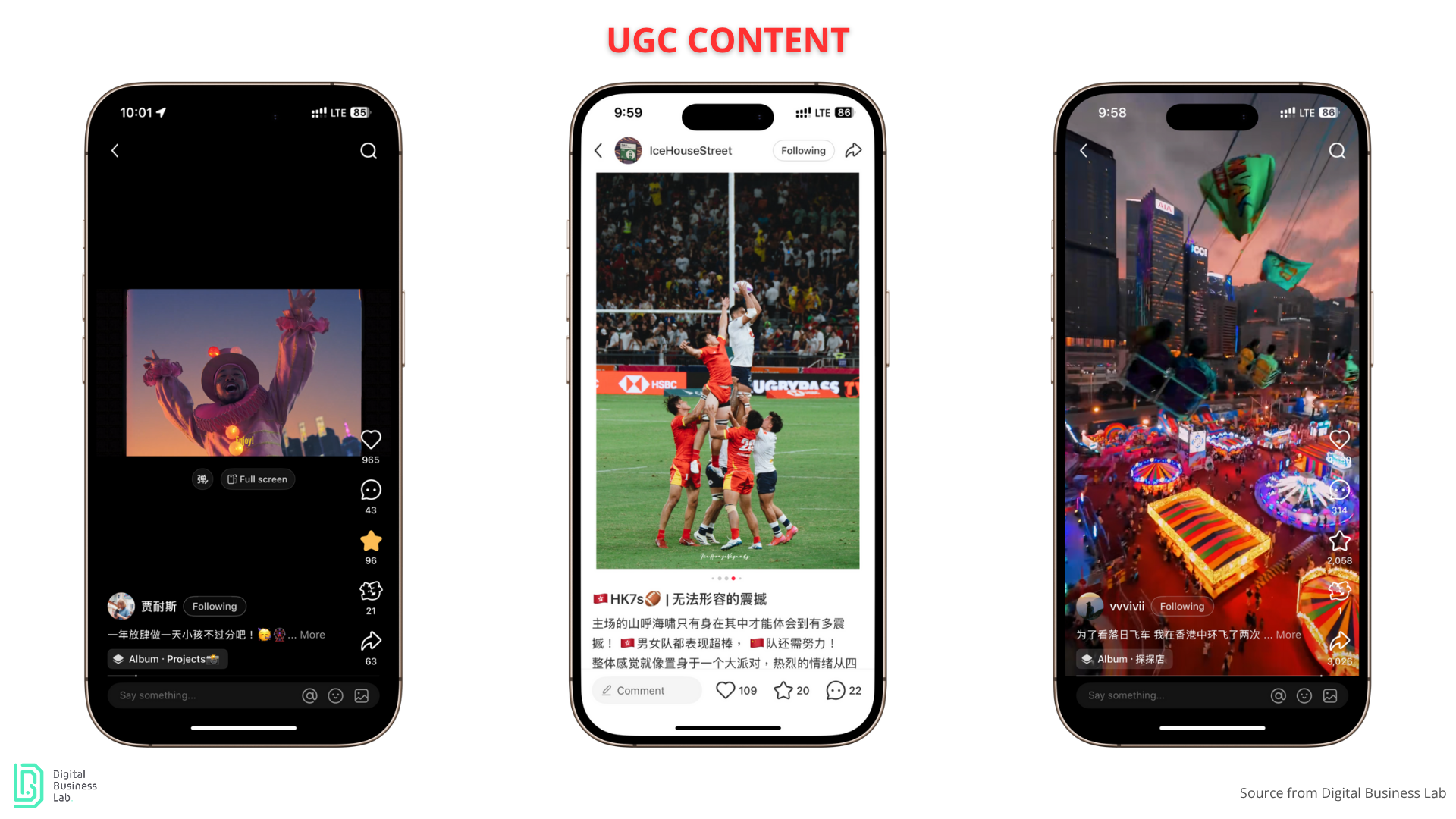
The rise of “anti-polish” content shows a shift in consumer preferences, with overscripted and edited videos seen as inauthentic. Instead, audiences are gravitating towards raw, spontaneous, phone-shot clips that showcase genuine personality and foster trust, imperfections included. This approach makes brands appear more human and relatable. User-Generated Content (UGC) is particularly appreciated in this context, as it amplifies authenticity by featuring real customers sharing their experiences. This trend is also showing on Chinese social media platforms, where our latest research on Xiaohongshu in Hong Kong and Xiaohongshu in Singapore revealed that a significant majority of users trust content from ordinary users more than professionally produced material.
Additionally, influencer content that is light-hearted and humorous resonates with audiences, feeling more like genuine conversation than advertising. To succeed, brands should act like creators, focusing on content that informs or engages rather than just selling. Prioritising value-driven connections through education, entertainment, or utility is essential. Moreover, the dominance of ultra-short video formats, such as Reels and Shorts, highlights the effectiveness of delivering punchy content with a strong ROI for awareness and engagement. The key is to capture viewer attention in the first 3-5 seconds and convey the value proposition in under 30 seconds.
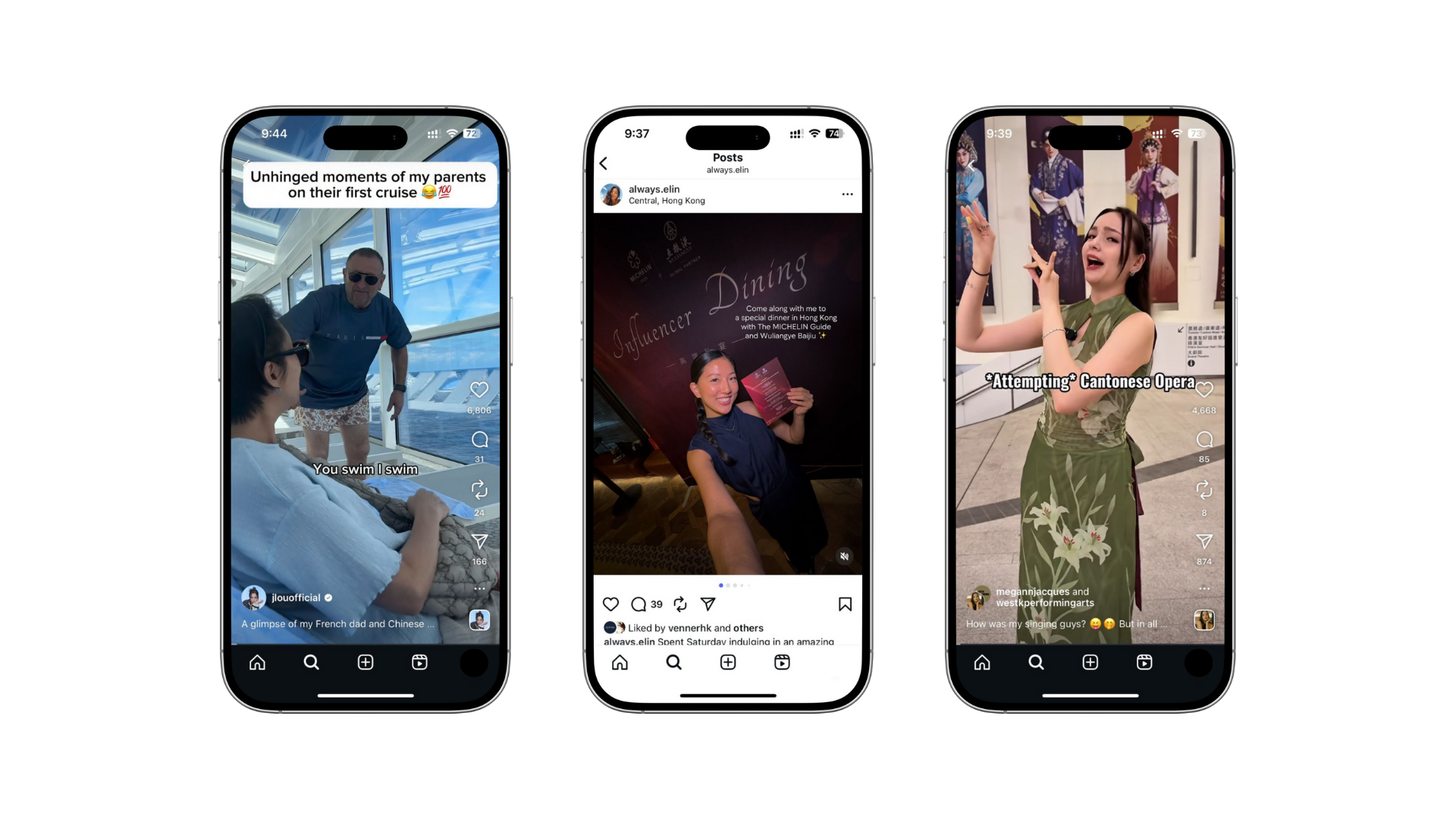
Influencers in Hong Kong showcase the effectiveness of simple production techniques. JLou (@JLouOfficial) collaborates with brands like Royal Caribbean and Singapore Airlines, creating relatable content. Megann Jacques (@megannjacques) engages followers through cultural events at the West Kowloon Performing Arts Centre, while Elin (@always.elin) shares authentic restaurant recommendations. Together, they demonstrate how unrefined storytelling fosters trust and relatability.
Trust and Purpose as the New Algorithm
Purpose-driven branding has become essential as consumers increasingly expect brands to align themselves with social impact or pressing global issues. To foster trust and minimise backlash, alignment could benefit from transparency and consistency rather than just performative campaigns.
In a landscape flooded with AI-generated content, prioritising authenticity is essential for gaining customers’ trust. Overloading consumers with AI-generated text or visuals can be detrimental, as it may lead to skepticism. Social media platforms like Meta are labelling AI-generated content, and over-reliance on it can harm a brand’s reputation if not done thoughtfully.
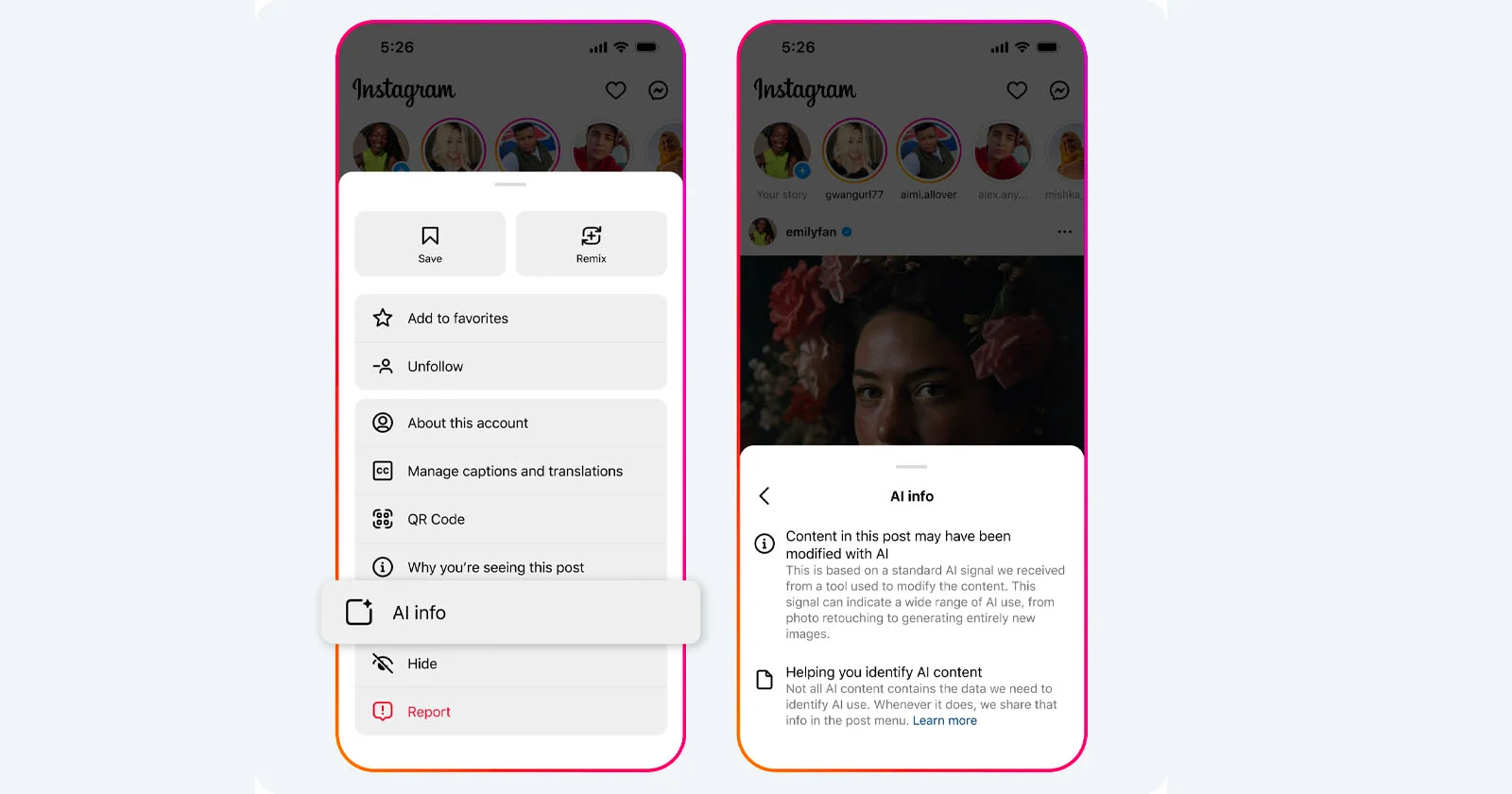
Moreover, brands must understand that trust signals are crucial for customer experience. A poor offline experience will inevitably reflect online, making it essential to focus on creating reliable, high-quality products and services. Prioritising exceptional customer service can foster trust and loyalty, ultimately enhancing the brand’s online presence.
Navigating AI and Authenticity in Content Creation & Branding Trends
As brands rely on AI for marketing, balancing AI-generated and authentic content is crucial. The following grid categorises different types of content based on their reliance on AI, authenticity, and position in the marketing funnel, serving as a guide for content creators and marketers.
| Content type | AI Impact | Authenticity | Marketing funnel | Main Objective |
|---|---|---|---|---|
| BCG | High impact | Low authenticity | Upper funnel | Catching attention |
| KCG and UGC | Medium impact | High authenticity | Full funnel | Credibility |
This grid can be utilised by content creators, marketers, and businesses to guide their content strategies. It helps identify how AI can be integrated while maintaining authenticity and maximising the effectiveness of marketing campaigns.
- BCG: This type has a high impact during the production process but lacks authenticity. It is primarily used to grab the attention of users and is situated at the top of the conversion funnel.
- KCG and UGC: These contents involve human contributions, which enhances their authenticity. The AI impact is medium, as AI may assist in some tasks, but human authenticity is at the core of these content types. They cover the entire marketing funnel, focusing on credibility and emphasising the unique selling propositions of key opinion leaders (KOL).
Community, Connection, and AI Optimisation
The focus of marketing is increasingly shifting from audience-building to community-nurturing, prompting brands to invest in private or niche communities on platforms like Discord, Slack, and LinkedIn groups.
This fosters deeper loyalty, enhances insights, and encourages User-Generated Content (UGC) and micro-influencer partnerships. These content creators often have stronger relationships with their followers, making their endorsements feel more genuine. Another approach is to cultivate brand advocacy by turning loyal customers into advocates. This can be achieved through programs that reward them for sharing their experiences, fostering authentic content creation and enhancing community engagement.
Furthermore, credibility is cultivated through the individuals behind the brand; thus, brands should empower internal subject-matter experts to publish content in their own names, establishing authority and human attribution.

AI plays a crucial role as a collaborator rather than a creator, enhancing efficiency in drafting, optimisation, and ad targeting while requiring human judgment, empathy, and brand voice. Additionally, content must be structured for AI-Driven Discovery (AIO), ensuring that details like captions, titles, and videos effectively address consumer inquiries and can be referenced by AI chat systems. As social commerce transitions from being merely a feature to a standard expectation, brands need to integrate their sales funnels directly into platform tools, such as TikTok Shop and Instagram Checkout, to reduce friction and maximise visibility.
Content Do’s & Dont’s in 2026
| Strategic Category | DO | DON'T |
|---|---|---|
| Trust & Authenticity | Be transparent: Disclose all ads/partnerships clearly. Use human, human-edited, or clearly labeled AI content. Be purposeful: Align your content with a genuine mission and back claims with measurable action/evidence. Go "Anti-Polish": Prioritise raw, unscripted, phone-shot videos and real, unpolished storytelling over high-budget, slick productions. | Use clickbait: Headlines that over-promise or mislead will instantly destroy long-term trust and tank your reputation. Over-edit/Over-produce: Content that is too "perfect" looks like an ad and is often dismissed in favour of the authentic. Be performative: Don't jump on social issues or trends without an authentic, consistent brand commitment. |
| Engagement & Value | Lead with value: Ensure 80%+ of content is educational, entertaining, or useful before it promotes a product (e.g., the 80/20 rule). Listen & respond: Dedicate resources to social listening. Join conversations about your industry to add value, not just to post. Build community: Invest in private groups or niche platforms. Encourage UGC and co-creation with customers and experts. | Broadcast only: Stop viewing social media as a one-way megaphone for promotions. Ignore negativity: Do not delete negative comments or complaints about service. Address issues publicly and gracefully. Post for frequency over quality: Prioritise consistency and high-quality, memorable content over high post volume. |
| Platform & Format | Optimise for AI Discovery (AIO): Structure captions, titles, and hooks to answer search queries with natural keywords (Social SEO). Be platform-native: Adapt voice and visuals to each channel (YouTube long-form, TikTok/Reels quick hits, LinkedIn thought leadership). Focus on frictionless commerce: Use product tagging, in-app checkout, and live shopping features. | Neglect short-form video: Long-form content without short-form versions will miss a huge audience. Abandon mobile-first: Content that doesn't load or look good on mobile gets ignored. Rely on external links: Minimise off-platform redirects — algorithms reward in-app engagement. |
Here are two projects where we effectively implemented influencer marketing in a purpose-driven and authentic manner, yielding valuable results for the brands:
Xiaohongshu Influencer Marketing: Driving Immediate Leads for HK7s in Mainland China
Xiaohongshu Influencer Marketing in Hong Kong: Boosting AIA Carnival ticketing
These examples illustrate how adhering to the outlined do’s can lead to impactful results in influencer marketing, reinforcing the importance of authenticity and purpose in brand strategies.
Branding trends built for GenX and Z
To effectively engage with today’s consumers, brands must recognise the unique values and preferences of Generation X and Z. These demographics are characterised by their desire for authenticity and transparency, seeking connections that resonate on a personal level. They are not just looking for products; they seek meaningful experiences and relationships with brands that align with their beliefs and identity.
Content aimed at Generation X and Z must center on key themes such as authenticity and honesty, appealing to their desire for genuine connections. Incorporating elements of throwback culture and nostalgia can strengthen this bond, while weaving in the story of the brand enhances relatability. Successful branding, therefore, is about making consumers feel confident in their choices, ensuring they believe that their decision enhances their lives. It’s crucial for brands to communicate that their offerings are the “right fit” for the consumer, fostering a deep connection that reflects personal taste and individuality.
Staying ahead of the curve
In conclusion, to remain competitive, brands must stay ahead of the curve by continuously adapting to emerging branding trends and actively listening to consumer feedback. By anticipating shifts in consumer expectations, they not only keep pace with current developments but also position themselves as leaders in a rapidly evolving marketplace. Embracing this proactive approach will empower brands to build stronger connections with their audiences and thrive in the dynamic landscape of the future.
Key takeaways
- Authenticity over polish: Consumers are gravitating towards raw, spontaneous content that feels genuine. Brands should favour “anti-polish” videos to foster trust and relatability, focusing on engaging storytelling that resonates with audiences rather than high-production aesthetics.
- Purpose-driven branding: Aligning brand values with social impact is increasingly crucial, as consumers expect transparency and measurable actions. Brands must establish trust through clear communication and accountability, particularly in the face of heightened scrutiny and potential backlash.
- Community engagement: The shift from audience-building to community-nurturing highlights the value of fostering deeper connections. Investing in niche communities and user-generated content not only drives loyalty but also allows brands to leverage the expertise of their internal teams to create authentic and credible narratives.